
Help Center / site
Summary
As the Sr Manager of Technical Content Strategy, my team owns and maintains the NS1 Help Center. The Help Center is hosted by Zendesk and contains our library of documentation for all generally available products.

My role
I’ve written or edited most of the documentation contained within the Help Center (with some exceptions).
I applied custom CSS to the best of my ability to improve the look, feel, and function of the Help Center on my own due to the lack of budget or dedicated resources.
I am always looking for ways to improve the information architecture and organization of content to improve usability.
I implemented a third-party tool (Paligo) that allows us to reuse content and publish in several formats from a single source of truth.
Go to http://help.ns1.com to view the live Help Center. Upon request, I am happy to point you to specific examples of content I authored.

API reference / site
Summary
Being an API-first company, NS1’s API documentation is a critical component in ensuring a positive developer experience. When I joined NS1, I inherited an API documentation site built by engineers and marketers, but that continues to require refinement and maintenance within the constraints of limited bandwidth, a fast-moving development pace, and the typical communication gaps often found in startup environments. This means our API doc site improvements have been slow and incremental as we aim to improve existing API documentation while keeping up with new and improved feature delivery.
Despite these challenges, I’m always working to improve the quality — as in, completeness, accuracy, usefulness, and presentation — of our API documentation. Additionally, I’m always on the lookout for inspiration related to API and developer documentation to ensure we’re adhering to generally accepted standards and best practices.
Limitations
The API documentation site is hosted by the marketing website and is subject to marketing style sheets and processes. Unfortunately, the look, feel, and function of the API docs site is not particularly conducive to a modern developer experience. I worked with the agency managing our website to try to make some improvements while I work with the team to build a site that better serves our users. Additionally, as a one-person team, I am always advocating for more and better automation tools that ensure content completeness and accuracy. The required processes and tools to accomplish this have been identified, but are yet to be adopted by the broader team.

One of the more recent additions to the API documentation is a new section related to configuring DNSSEC & DNSSEC external keys via API. The new section includes more contextual information than what we typically include.

Refer to https://ns1.com/api for the full documentation site.

UX customer survey
After receiving a draft user survey from the Product team which lacked clear objectives and consistency, I proposed an alternative that would extract more useful information and actionable insights.
Summary
The Product team wanted to implement the first-ever in-app survey to gather information about the participating user and get their feedback on certain features and functionality. While reviewing their first pass at the in-app survey, it was obvious to me that the survey lacked a clear objective and would likely not render actionable insights. I provided feedback and proposed an alternative approach for consideration. After presenting the alternative compared to the original, the team immediately saw the potential benefits of taking a more thoughtful approach to the way we present and organize survey questions to gather higher-quality data.
The original version
The original survey created by the Product Manager and Product Designer included several high-level questions, such as:
“Where within the NS1 platform do you spend most of your time?”
“How would you rate your experience with NS1’s web portal?” followed by “Tell us more about the reasoning behind your rating.”
“How would you improve the experience?”
“How do you feel about the capabilities of NS1’s web portal?”
“Do you use NS1’s API?”
Related to the questions, my feedback was that many of the questions were way too general and put the burden on the participant to interpret the question. Also, many of the questions were related to information we could gather in other ways, so it doesn’t make sense to waste the end user’s time and patience by asking them in the survey. Further, each question was presented on an individual slide, requiring the user to click “Next” between each question — increasing the amount of time it takes to complete the survey as well as the expected drop-off rate.
My proposal
After sharing my general feedback with the team, I put together an alternative survey. The survey is shorter and consolidates questions into fewer modules. Instead of asking open-ended questions, I proposed a “agree or disagree” format where users could read a statement and respond. This allows us to compare responses in a more clear, consistent way while reducing risk of varying interpretations. Finally, I edited the copy to align with the brand’s technical tone and writing style guidelines.


The outcome
The team agreed that my proposed version would be a better approach and it is scheduled to go live shortly. As this is a very recent project and the survey is yet to be published, I will share more details about the outcome once available.

The cards / print collection

The cards
CHALLENGE
In preparation for a major industry trade show, we were tasked with developing new marketing collateral that would be printed and distributed at the booth. The initial request was for a more traditional brochure that included core messaging for the entire product portfolio, as well as their key applications and processes. The problem? These products were in very different stages of development, and they have very different target markets. Not to mention, we had about six weeks to develop, print, and ship the collateral to the event.
STRATEGY
We identified content requirements that would satisfy the initial sales request while adhering to a strict timeline. We knew that the right solution would:
Be easy to create and update on the fly
While in development, information about these products is constantly changing, so an all-inclusive brochure would have an inevitably short shelf life. Each card contains only a small bit of information, so we were able to execute a more agile content development process where we sent individual cards to the printer as they were ready.Speak to product-specific audiences
Ultimately, there were 18 individual cards. We designed them so that it would be easy for booth visitors to identify groups of cards that are relevant to their specific product interest. Additionally, this allowed us to apply product-specific branding and CTAs.Enhance the booth experience
Trade shows are seen as a primary opportunity for brand exposure and demonstrating industry leadership. The booth is nothing short of an art installation, so the collateral had to be extremely polished and contribute positively to the overall experience. Each card told a story about a specific product or display within the booth. A bin full of red binder clips encouraged attendees to notice the cards and create their own custom brochure.
GALLERY




RESULTS
On all accounts, the cards were very well received. The booth staff found them to be a useful resource during their conversations with attendees, and there were several immediate requests from partners to use the cards in their own marketing efforts. Even trade show attendees were enthusiastic, going as far as to share their feedback on social media:

Live Parts / product launch
CAMPAIGN | The challenge was to launch a highly complex software technology, Live Parts™, scheduled to announce during the keynote at a major industry conference. Requirements included new product positioning, a new website, a new sub-brand (DM Labs), print collateral, promotional and transactional emails, social media content, a presentation, a splash video, and sales tools — all within a six-week sprint.
Challenge
Define & implement product positioning
Make space within the brand architecture for beta projects
Create the necessary elements to launch the product at SolidWorks World 2018—with a formal announcement during the keynote speech.
Do this in less than six weeks
Research, positioning, & figuring out what “morphogenetic” means
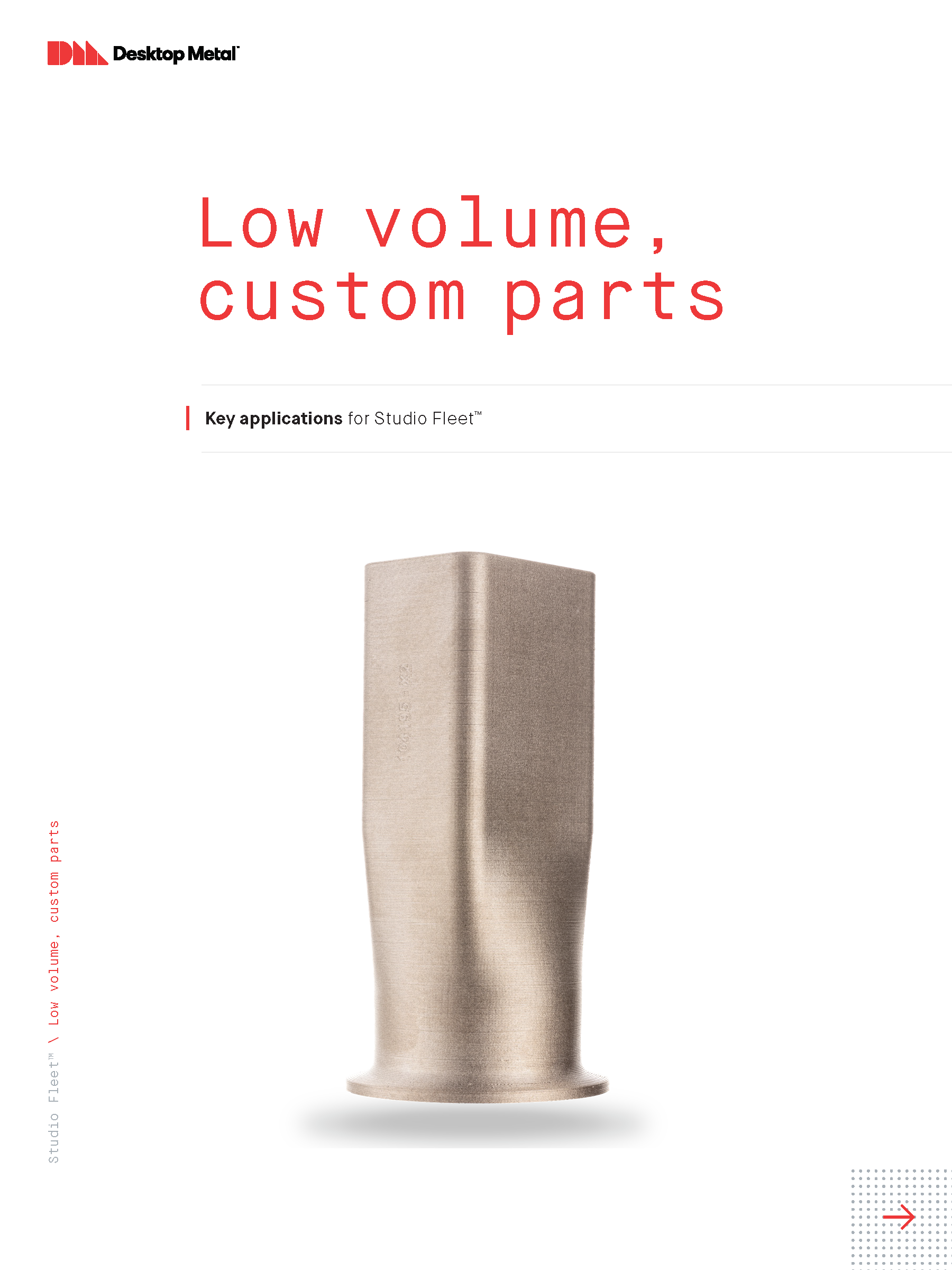
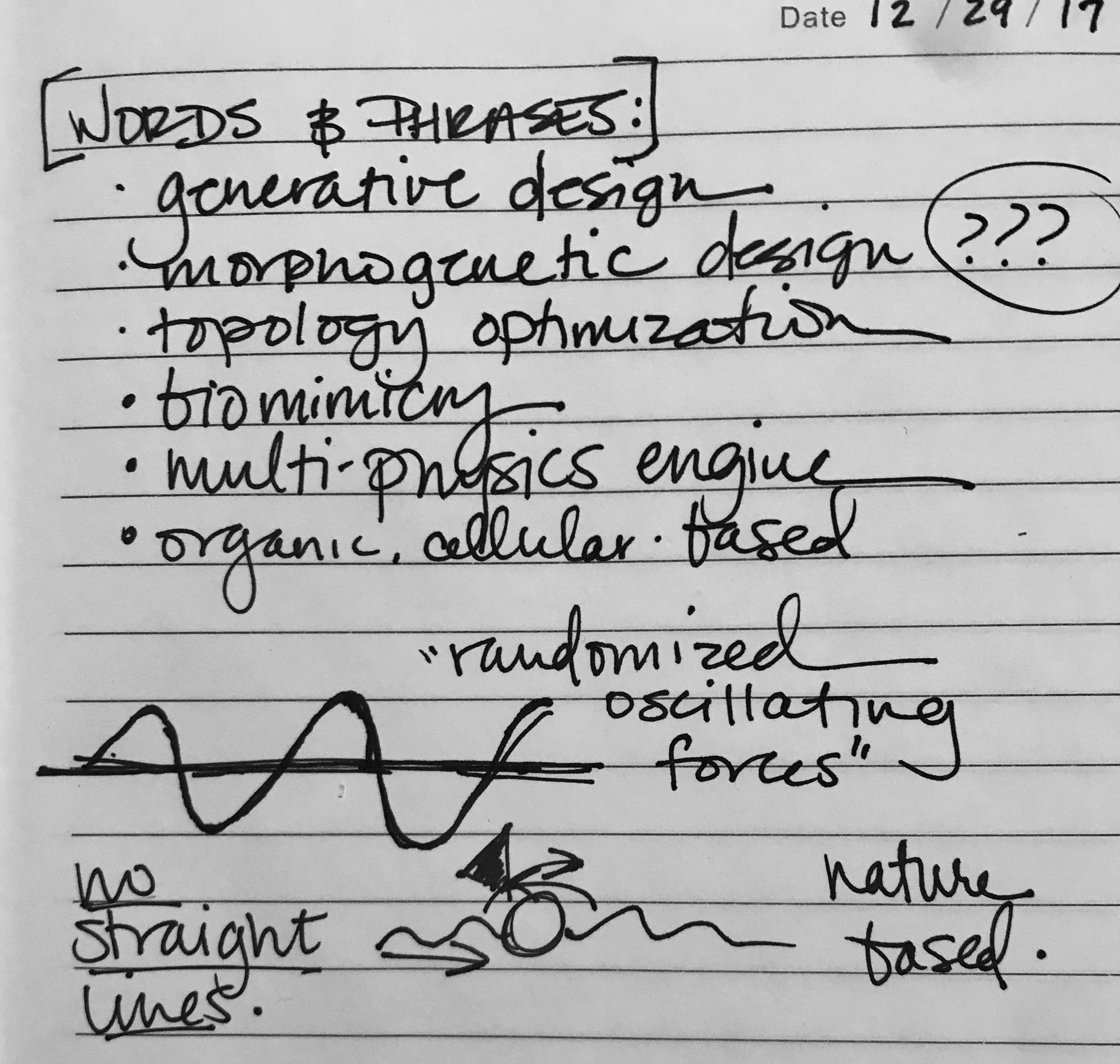
We’re talking about a software that generates part designs using algorithms that follow natural growth patterns—similar to the way plants and bones grow and adapt to their environment. For a small team of people who have never even heard of generative design, this required an intensive research period with only a few days to get up to speed on the technology and its relevancy in the marketplace.
Shaping the narrative
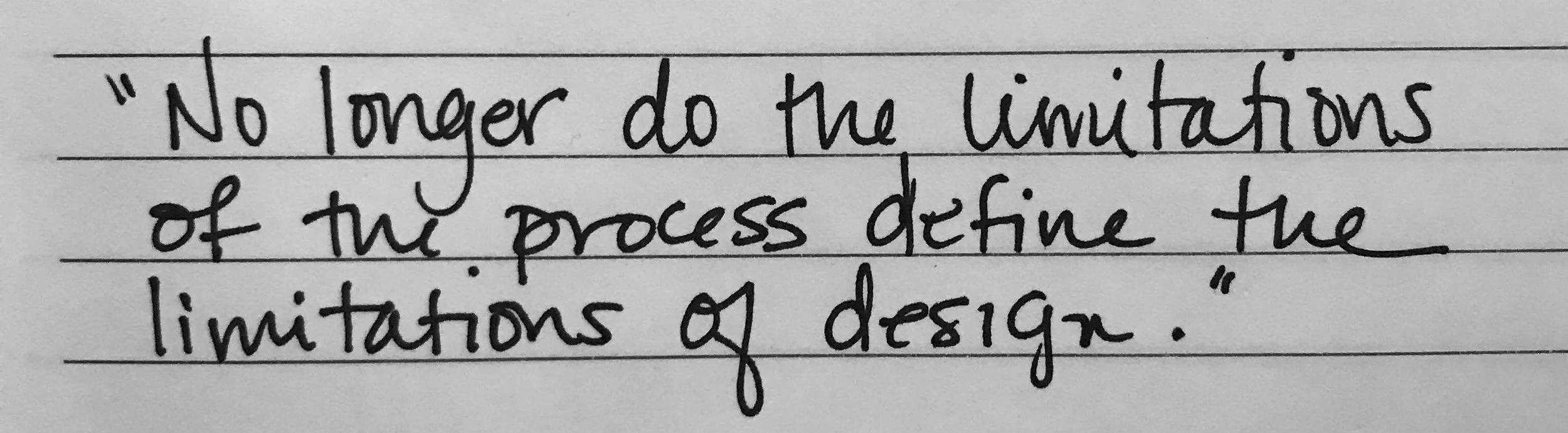
We’re committed to making metal 3D printing successful and more accessible to designers and engineers. We recognize the potential for this technology and the monumental impact it will continue to have on a range of industries and applications.
Additive manufacturing facilitates the fabrication of complex parts that are difficult or impossible to produce using traditional manufacturing methods. It severs the relationship between design complexity and part cost, so we can focus on producing parts that are stronger, lighter-weight, and optimized for their application.
But there is a difference between having access to greater design flexibility and knowing how to use it. It requires a totally different approach, tasking design engineers to come up with traditionally rebellious models while still adhering to design rules for each additive manufacturing process.
In order to make metal 3D printing successful, we need to address barriers that extend beyond the fabrication process—starting with a new approach to the way we conceptualize and generate part designs.
A new sub-brand
DM Labs was created as the foundation for beta projects, like Live Parts. It required a differentiating visual identity and tone—demonstrated through a secondary website.


Key elements


Metal 3DP + finishing methods / article
WHITE PAPER | The challenge was to educate an audience largely unfamiliar with metal 3D fabrication and skeptical about the resulting part properties. I wanted to provide introductory information about metal finishing while demonstrating the ability of printed parts to withstand various post-processing.
WHITE PAPER | The challenge was to educate an audience largely unfamiliar with metal 3D fabrication and skeptical about the resulting part properties. I wanted to provide introductory information about metal finishing while demonstrating the ability of printed parts to withstand various post-processing.


Promotional content
Metal 3DP + prototyping / case study
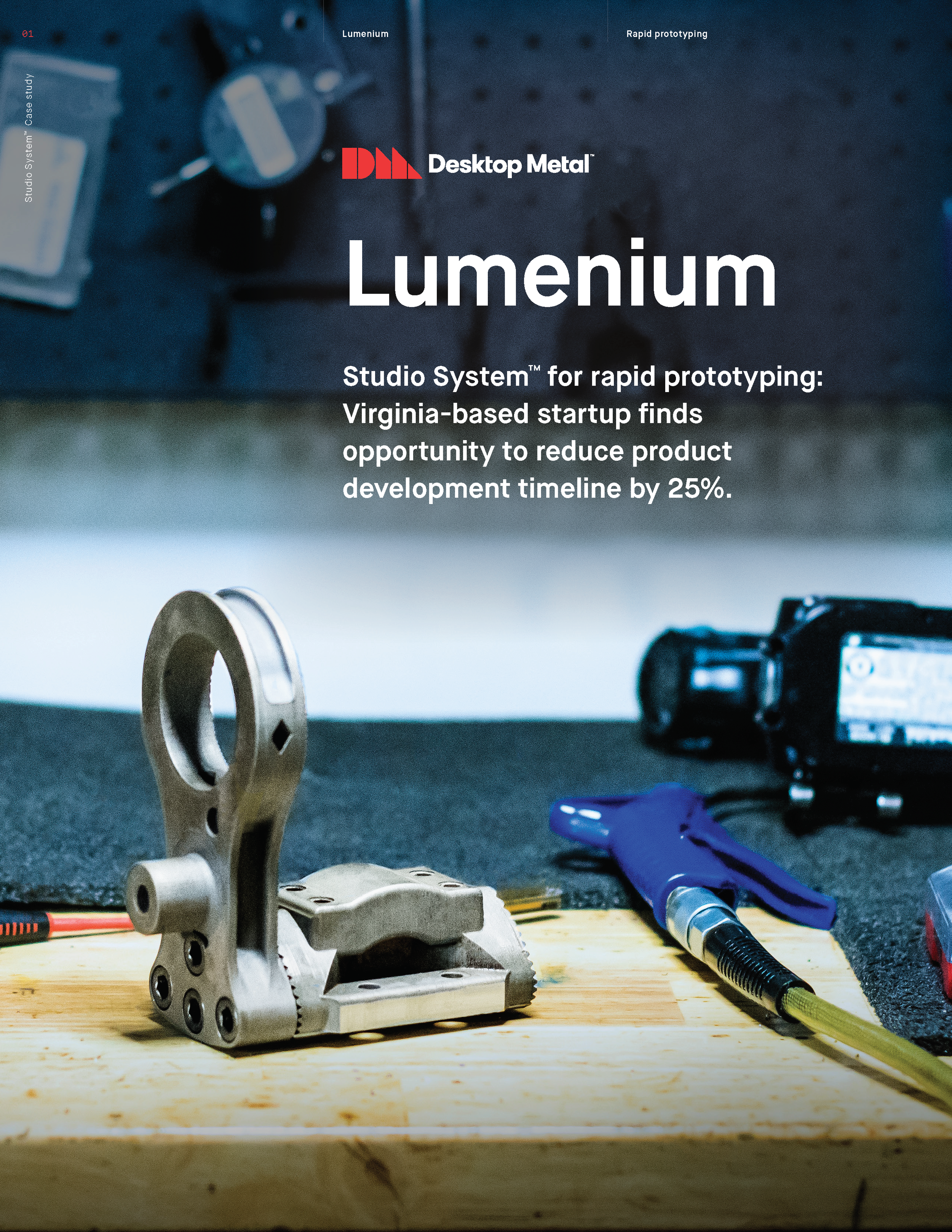
CASE STUDY | The objective was to demonstrate the product as a viable solution—reducing costs and product development timelines, as well as achieving desirable part properties.
CASE STUDY | The objective was to demonstrate the product as a viable solution—reducing costs and product development timelines, as well as achieving desirable part properties.
Long form
7-page case study detailing the application, process, and results.


Short form
1/2-page application summary card for print

Metal 3DP + tooling / case study
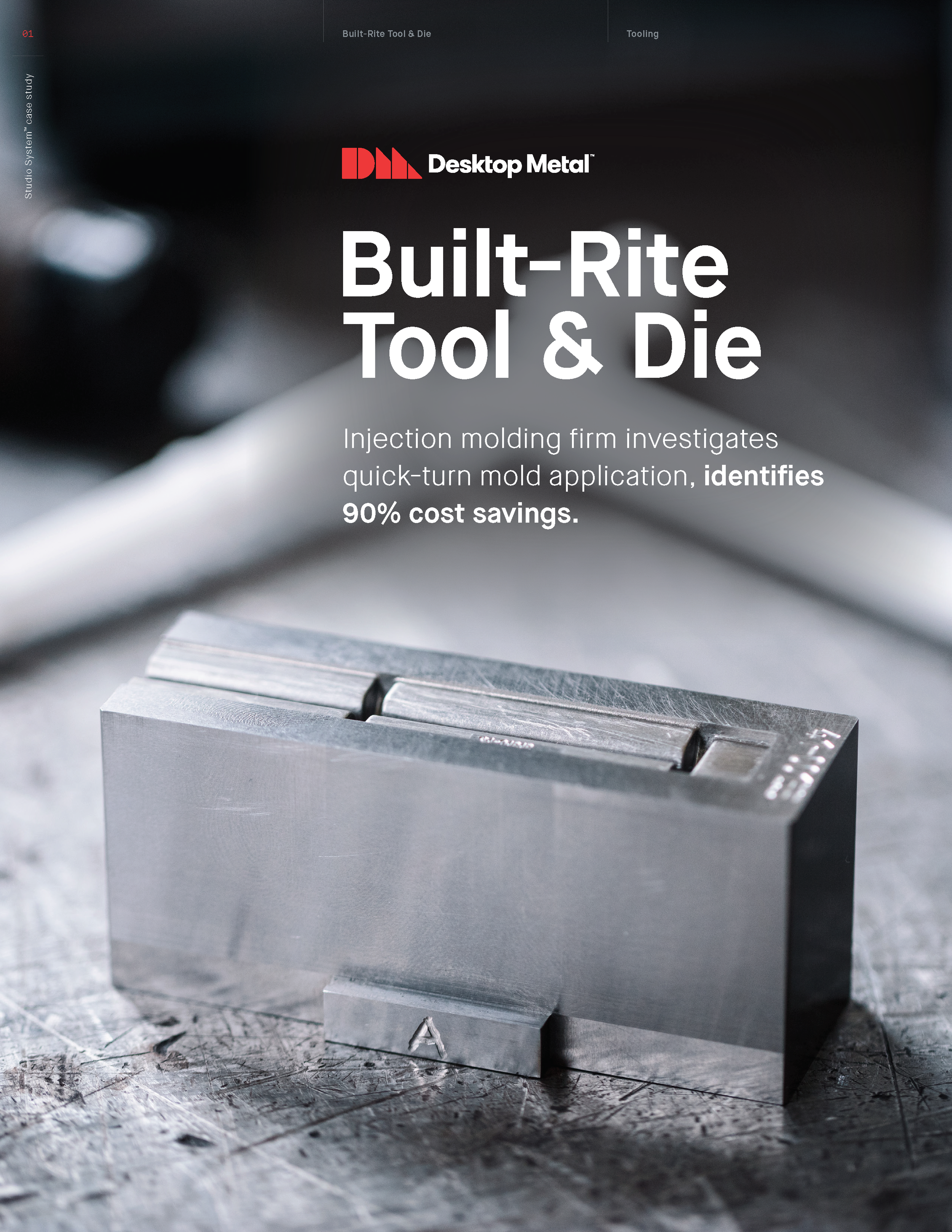
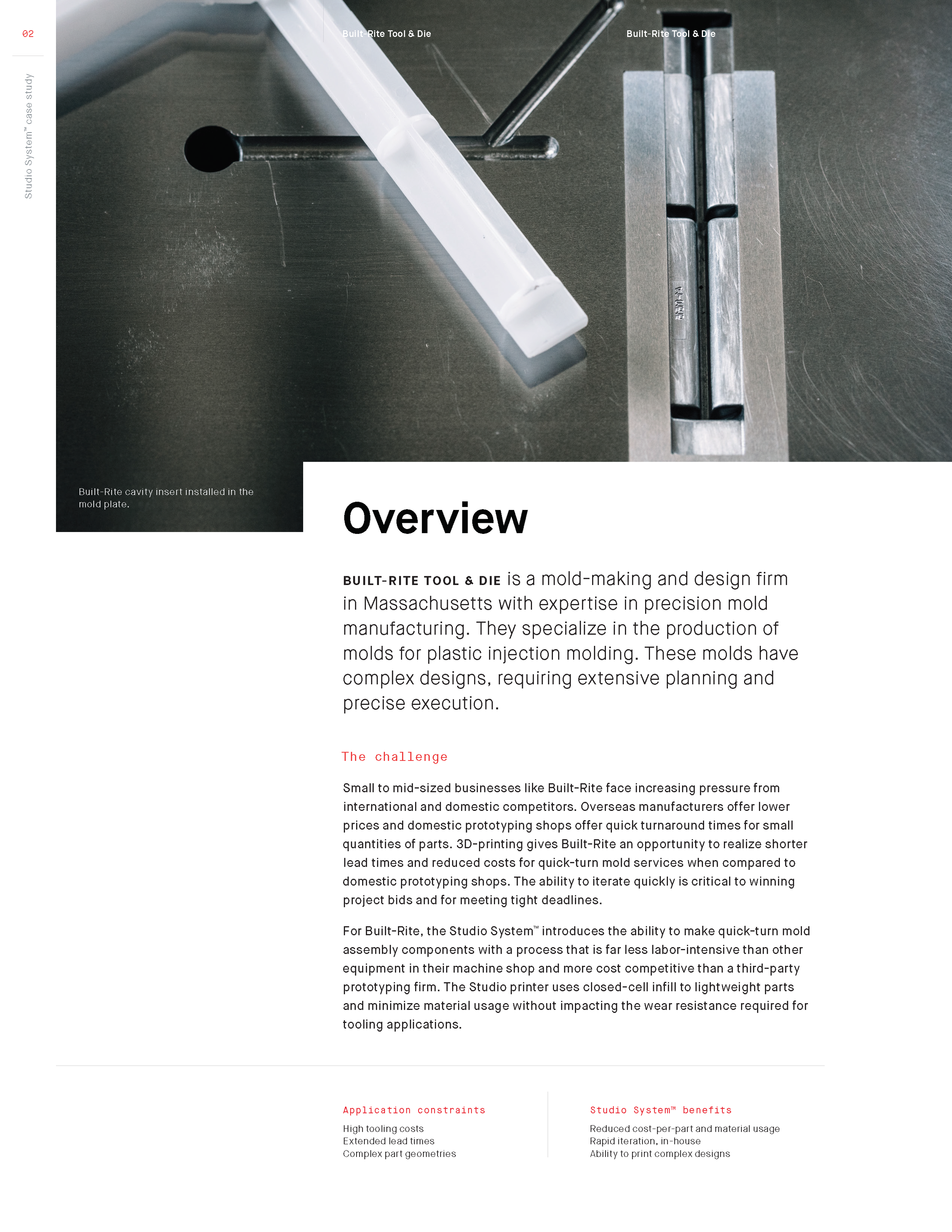
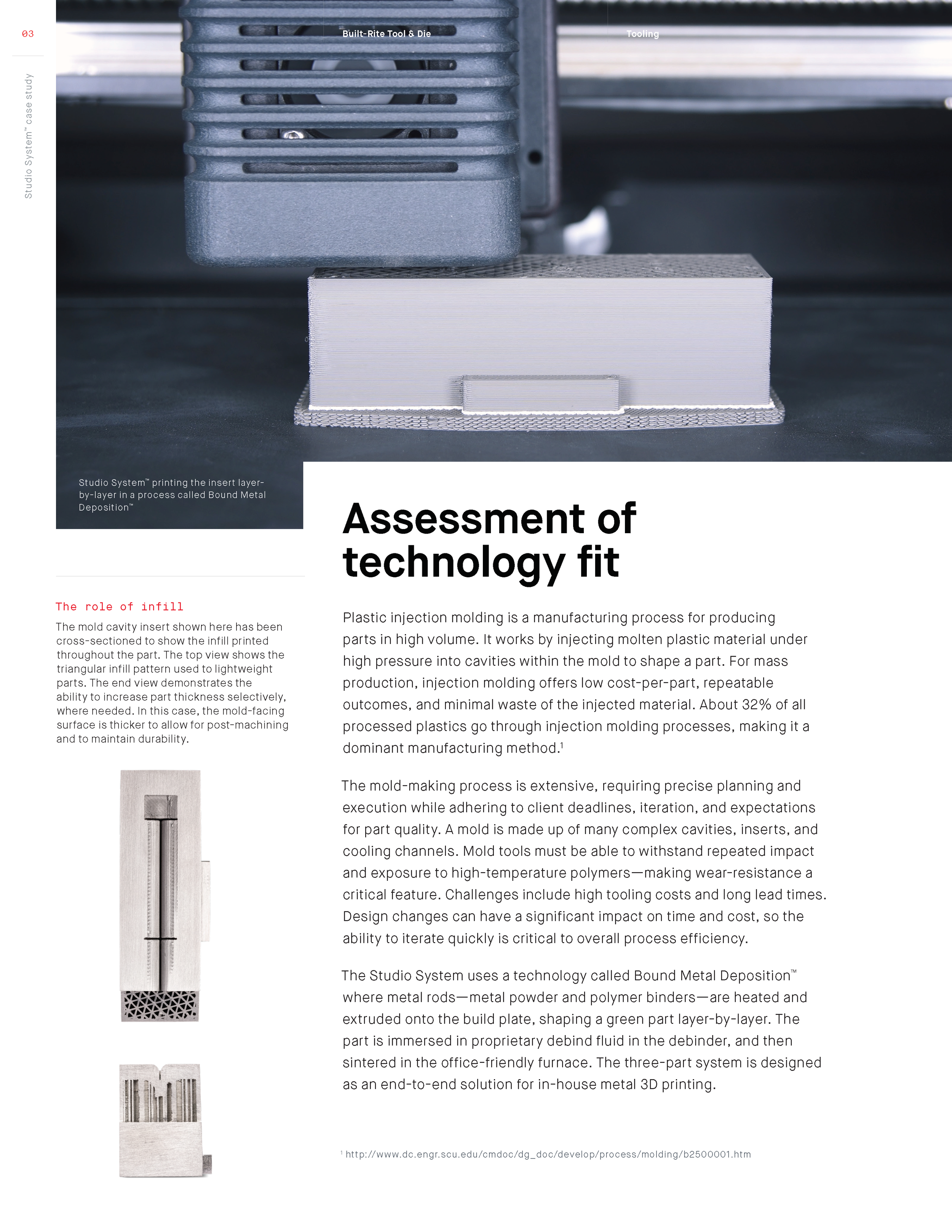
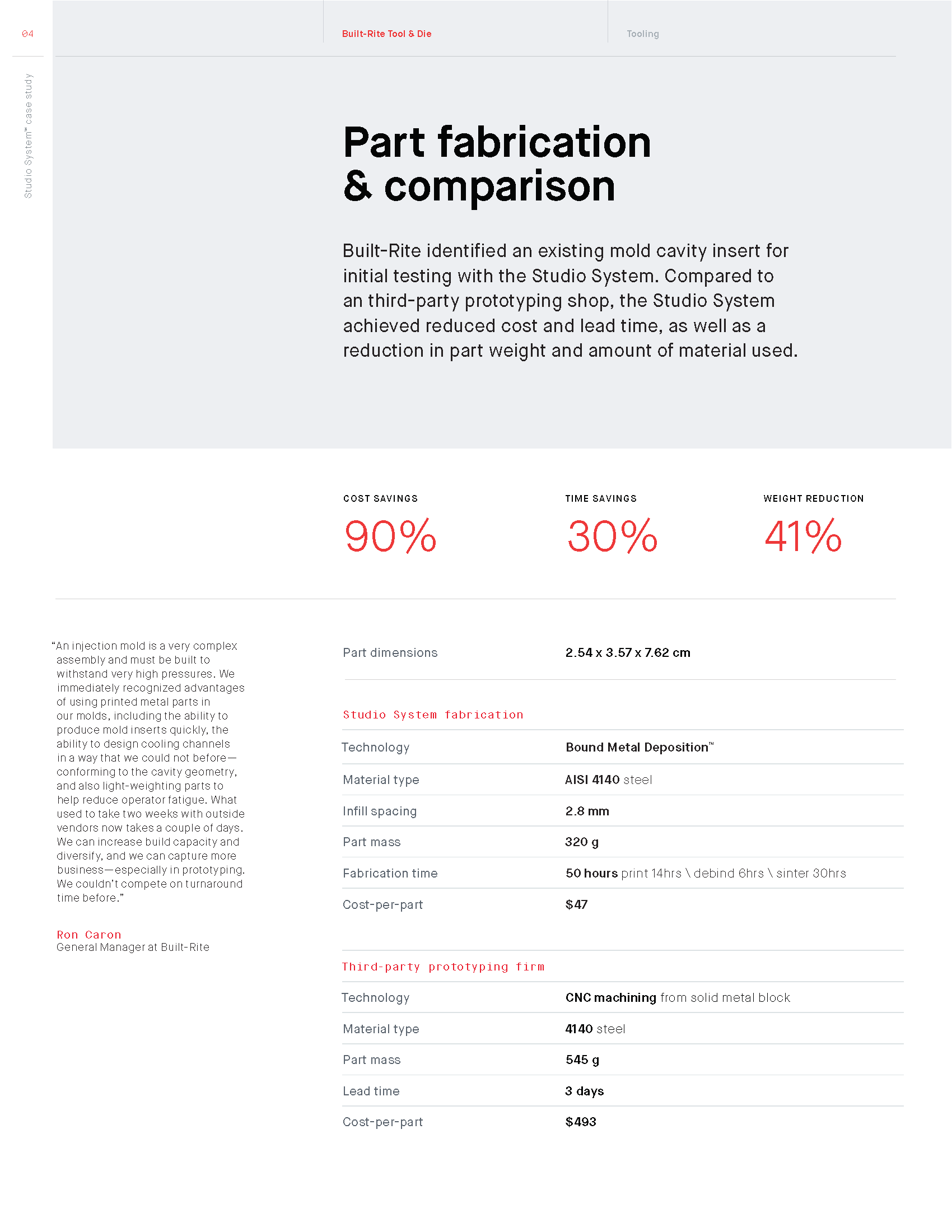
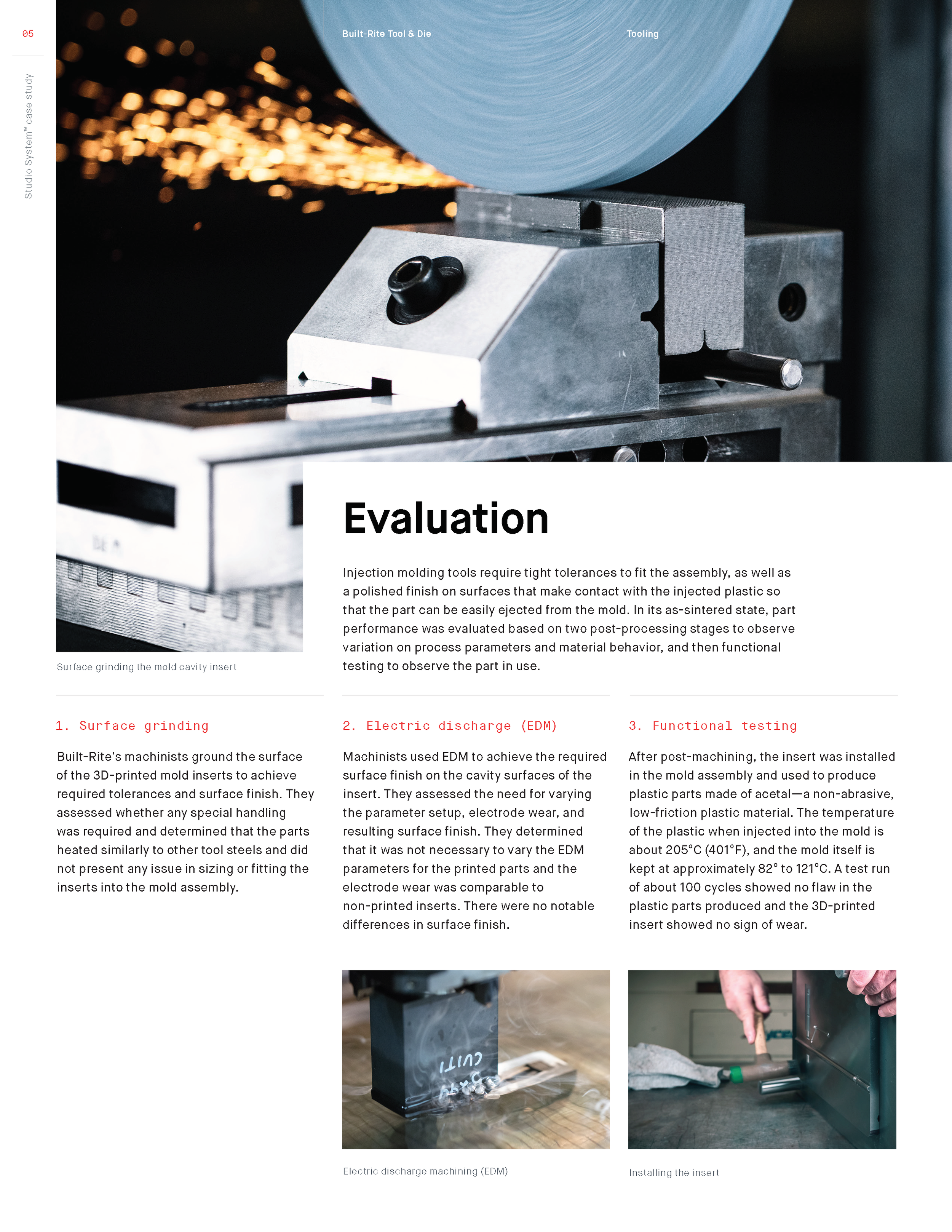
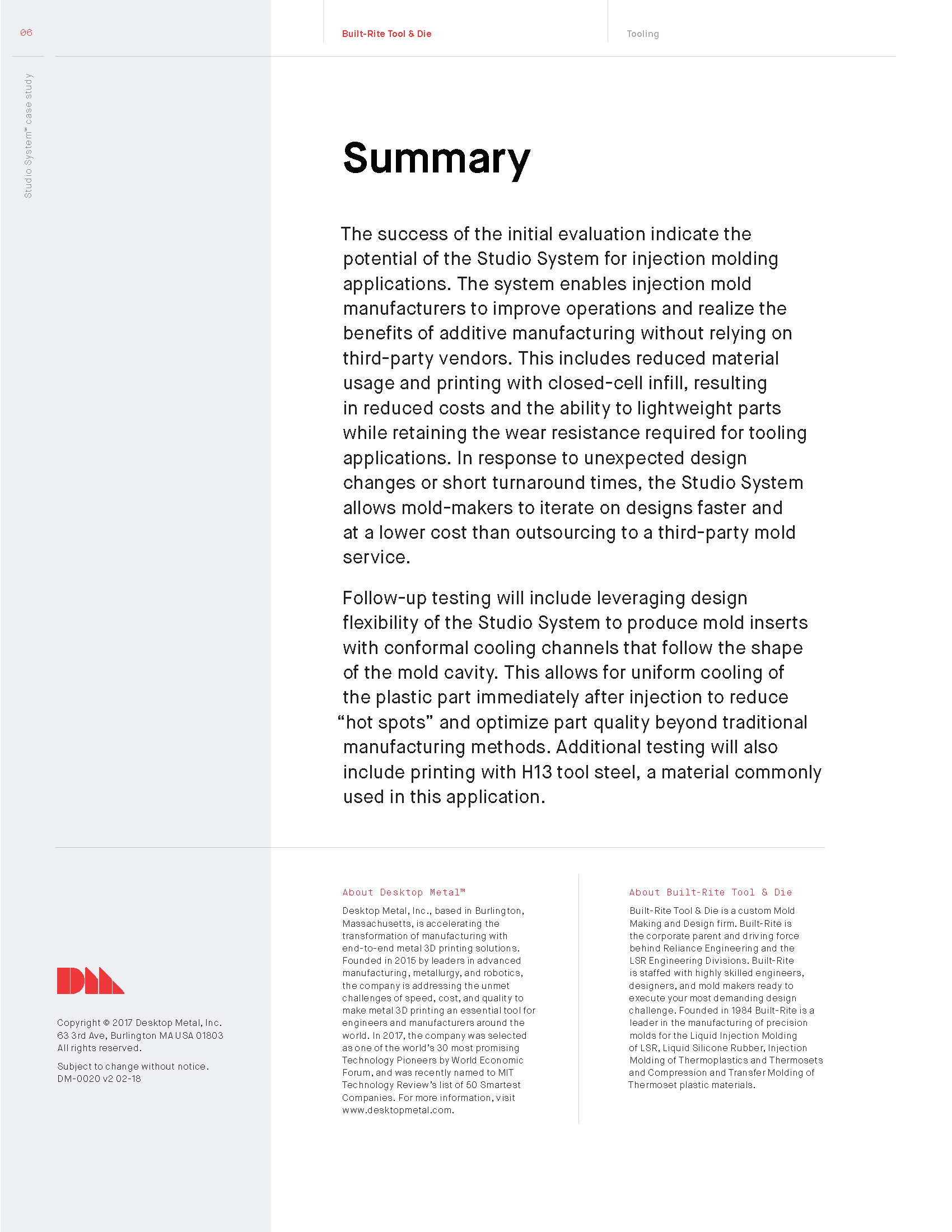
CASE STUDY | The challenge was to create the first-ever case study for the company, delivering an early case study that validates product messaging in the context of a real-life application.
CASE STUDY | The challenge was to create the first-ever case study for the company, delivering an early case study that validates product messaging in the context of a real-life application.
Metal 3D printer / spec sheet
CHALLENGE
Creating a spec sheet for the world’s first office-friendly metal 3D printer requires thorough research to better understand the target audience—what they’re looking for and how, in context, the information should be organized to be both familiar and educational.

Hardware specifications
Fixture selection guide / brochure
BROCHURE | The challenge was to design a quick-reference fixture selection guide that included key specifications and capabilities.
BROCHURE | The challenge was to design a quick-reference fixture selection guide that included key specifications and capabilities.


Industrial IoT software / brochure
BROCHURE | The challenge was to design a brochure that illustrated the key benefits of an intelligent lighting management software.


Intelligent LED fixture / install instructions (multi-lingual)
CHALLENGE
Provide detailed instructions for installing intelligent LED fixtures in an industrial facility — including inline translation into seven languages while adhering to relevant international regulatory requirements.

Installation instructions

Sensor selection guide / brochure
BROCHURE | The challenge was to create a brief yet informative brochure that guided users through product selection based on their application and facility specifications.
BROCHURE | The challenge was to create a brief yet informative brochure that guided users through product selection based on their application and facility specifications.




Intelligent LED fixtures / spec sheet
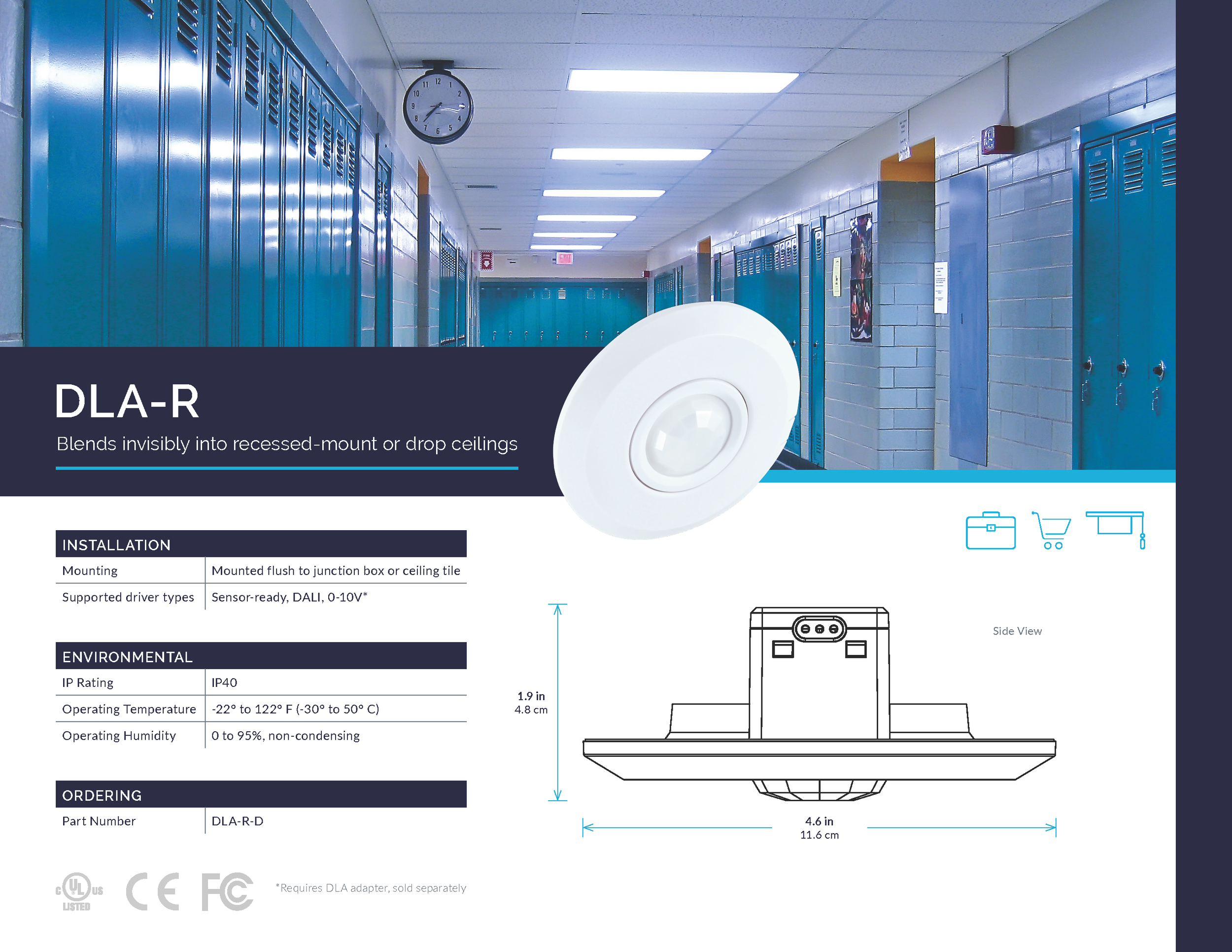
CHALLENGE
The challenge was to cover in detail the technical specifications, positioning, ordering information, regulatory requirements, and configuration-based performance comparisons for the entire product family in no more than eight pages.
